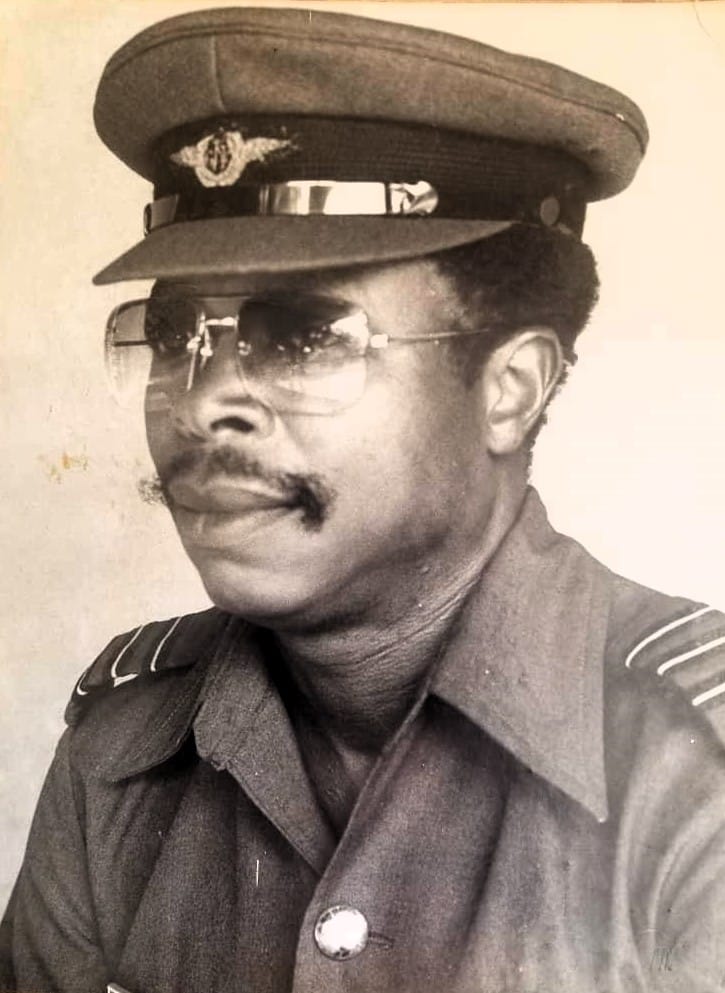
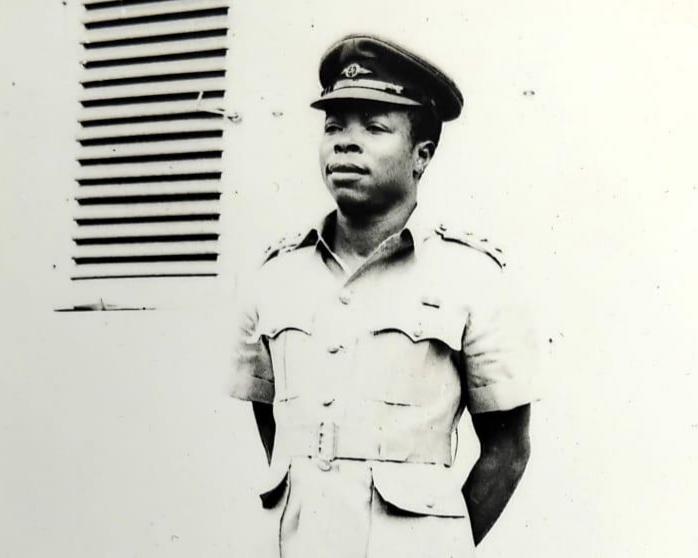
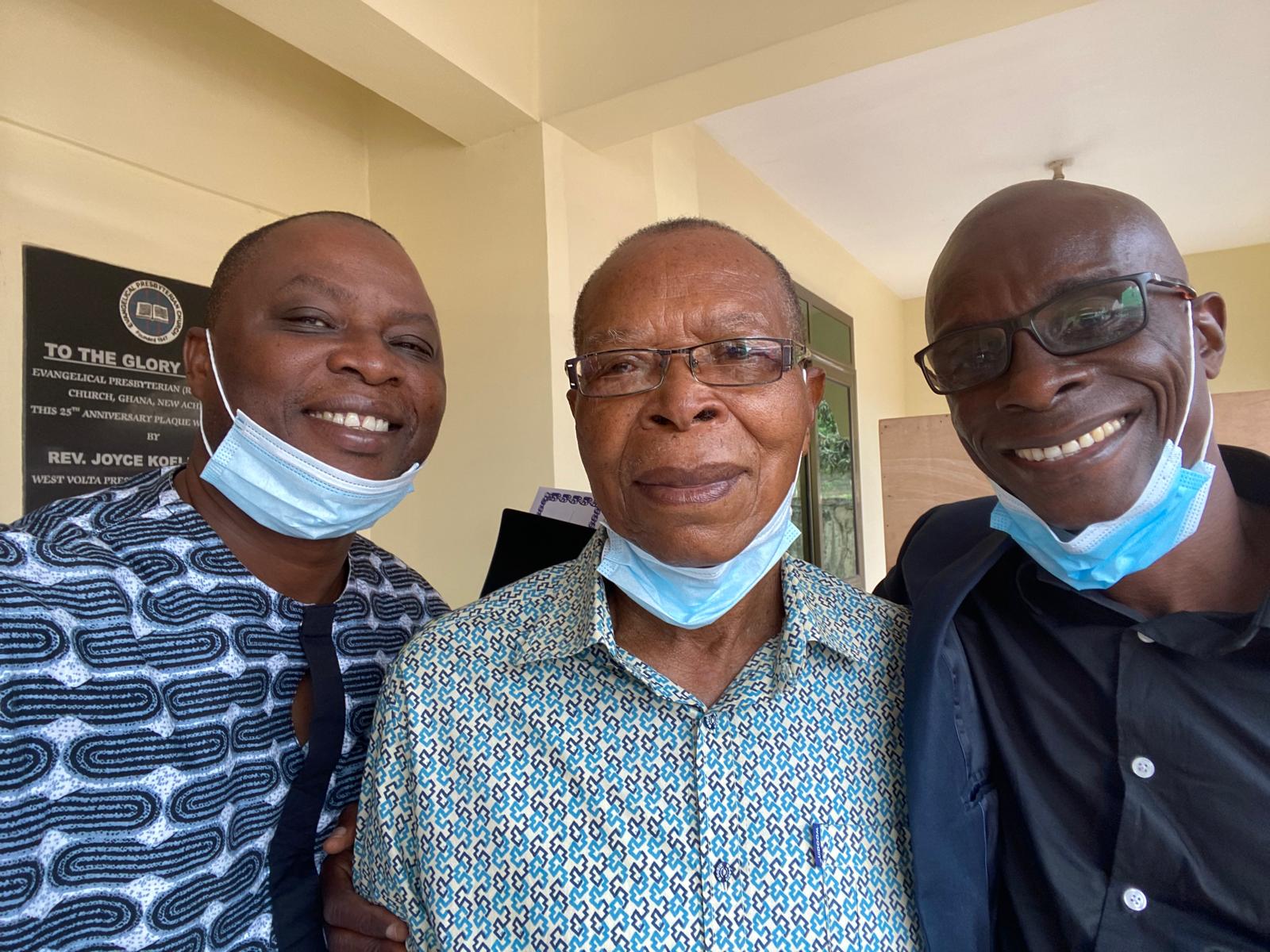
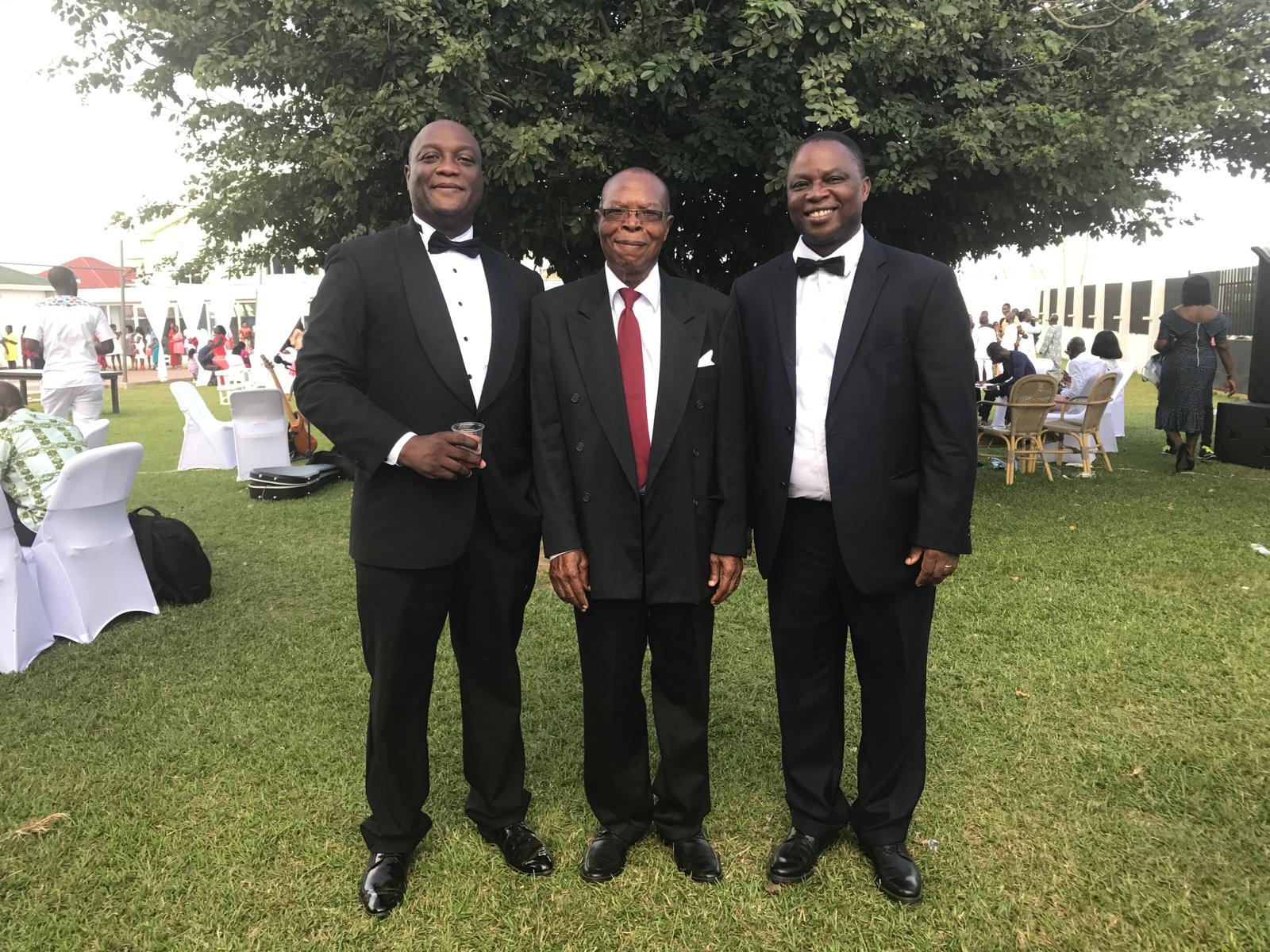
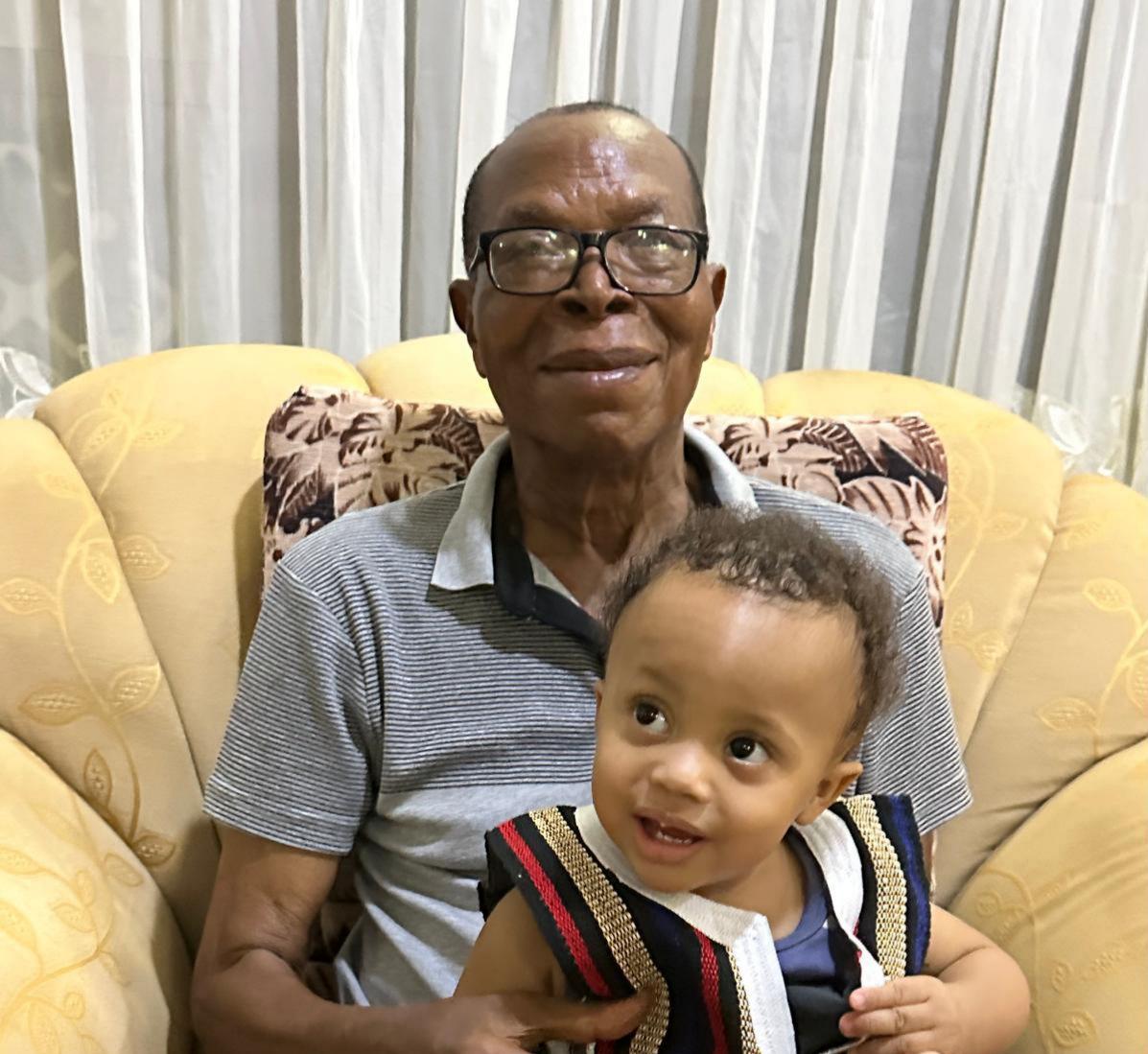
Wing Commander Godwin Hannock Komla Atadja — known and loved across his world as “Fo Hannock,” “WingCo,” or simply “Daddy” — was born on 25 June 1935 at Ve Deme, then a remote village in the Volta Region of Ghana. He was the son of the late Ferdinand Nyasorgbor Komla Yao Egblemese Atadja and Diana Akuakpuie Atadja, née Bede.
His was no ordinary lineage. He was a direct descendant of the Tendeku Royal Stool and Clan — one of the Kpekpe Etor founders and leaders of the Ve State — the direct grandson by birth of Togbui Atadza Tendeku IV, and the younger brother by birth of Togbui Atadza Tendeku VI.
He was baptized into the Evangelical Presbyterian Church as a child at Ve Deme and given the name Godwin Enoch Komla Adikye. The name “Hannock,” by which he would be known and called throughout his life, was in fact a tender corruption of “Enoch,” the name with which he had been christened — a name his parents and relatives, unable to pronounce it with ease, softened and reshaped by adding an “H.” He carried the story with great delight, especially after one of his sons, a student of Hebrew, told him that “Hanoq” was the Hebrew rendering of the name of the father of Methuselah, the oldest huma…
He was baptized into the Evangelical Presbyterian Church as a child at Ve Deme and given the name Godwin Enoch Komla Adikye. The name “Hannock,” by which he would be known and called throughout his life, was in fact a tender corruption of “Enoch,” the name with which he had been christened — a name his parents and relatives, unable to pronounce it with ease, softened and reshaped by adding an “H.” He carried the story with great delight, especially after one of his sons, a student of Hebrew, told him that “Hanoq” was the Hebrew rendering of the name of the father of Methuselah, the oldest human being recorded in Scripture. And so, without formal schooling and without ever realizing it, Fo Hannock’s parents had named their son after one of the most revered figures of the faith.
In 1938, when he was barely three years old, his parents moved him and his siblings from Ve Deme to their ancestral home at Ve Koloenu, taking up the family name Atadza, the name of his grandfather and ruler of Ve Koloenu. He would recount with vivid joy the day of that homecoming — carried on the shoulders of his eldest brother, Paul, as the whole town of Koloenu came out to meet them with drumming and dancing at Toloekokoedzi.
A few years later, the family moved again, this time to Baika, where his parents became cocoa-farm sharecroppers. He kept a treasury of memories from Baika — among them the rare chance to eat chicken when traditional priests performed their rituals with fowl at the cemetery near his parents’ house, and he and the neighbourhood children would gather whatever was left behind. Their time in Baika was cut short when the town was attacked and burned during an inter-tribal conflict with the neighbouring Akpafu people, and the family returned once more to Koloenu. There, as a blessing in disguise, young Hannock found the opportunity that would change his life: the chance to begin formal education. In those years, Koloenu was one of the very few towns with schools — from Infant School through to a Senior Boarding School — drawing students from far and wide.
A Childhood of Determination: Education Against the Odds
In 1945, at the age of ten, Hannock began Class 1 at the E.P. Infant School. He would tell of running the two miles to his father’s farm during the one-hour break after the morning session, where a lunch of roasted cassava — and sometimes yam — waited for him. There, he would gather firewood or ingredients for supper to carry home before hurrying back for the afternoon’s lessons.
He excelled. At Standard 6, then Middle Form 2, at the insistence of his cousin Mr. M. Y. Seneadza and with the encouragement of his elder brother Paul — both teachers at the time — he sat the Common Entrance Examination for admission to secondary school and passed with flying colours. It was M. Y. who insisted that he choose a school far from home, one that would broaden his horizons; and so, with the help of M. Y. and Paul, he was admitted to the Ghana Secondary Technical School in the port city of Takoradi, in the then Gold Coast, hundreds of miles from Koloenu.
That admission opened more than a classroom door. Crossing the Volta River into the “modern world” of the Gold Coast, Hannock wore his first pair of sandals — bought for him by his brother Nicholas, a driver in Accra, for the journey to Takoradi. To supplement his brother Paul’s financial support through school, he walked the ten miles each way from Koloenu to Hohoe during the holidays to buy razor blades and matches to resell at home, and he collected firewood for sale to the Ziga Pottery Works at Koloenu to add to what Paul and their father could provide. He never forgot how thin his English vocabulary was compared with that of his classmates, nor how he would hide in the bushes near the school to read and memorize phrases from the only book he owned — Treasure Island, a gift from his cousin M. Y. In the end, he completed secondary school with outstanding G.C.E. results.
Finding His Wings: From the Sea to the Sky
Upon leaving secondary school, Hannock first entered Ghana’s Nautical College for naval training. But after a single transatlantic voyage, he knew the sea was not for him, and he absconded. Bound by the contract he had signed, he became, for a time, a wanted man — playing hide-and-seek with the law until he found his way into training with the Ghana Air Force.
He loved flight school, and the cockpit felt like home. That is why he would call it the worst day of his life when, after a successful solo flight from Takoradi to Accra, he was told that although his technical skills were excellent, he did not have the personality traits to become a successful pilot. His world came crashing down. He fell into a depression that lasted months and even considered leaving the country, going so far as to obtain scholarships to study in Eastern Europe. It was his brother Paul — ever his anchor — whose emotional support and steady refrain, “The end crowns the work,” kept him on course. He stayed, and he passed out as a Pilot Officer in “Intake IV,” commissioned with the very signature of Osagyefo Dr. Kwame Nkrumah himself. It was another proud moment.
A Master of Numbers: A Career in Military Finance
After his commissioning, Hannock was selected by the Ghana Armed Forces to study Engineering at the then Kwame Nkrumah College of Technology — now KNUST. But fate intervened. The day before he was to leave for Kumasi, he was summoned to the office of Colonel Slater and told that his selection had been changed: he was to join the Forces Pay Corps instead. Finance and accounting were fields in which he had neither experience nor interest. It felt like another blow.
Within months, he was bound for Cost and Management Accounting training in Winchester, England — and the journey there became a story in itself. As the Ghana Airways VC10 entered Algerian airspace, one of its engines lost power; but with war and insecurity in Algeria below, it was not safe to land, and the pilot was forced to nurse the aircraft back to Accra on a single engine. Ultimately, Hannock completed his studies and returned home safely — to be met at the airport by a delegation from Ve Koloenu and carried back to the village, where his brother Paul, by then the chief and ruler of Koloenu, held a great celebration of thanksgiving to God for his survival of the VC10 ordeal and his success abroad. He recalled the memorable story of how a ram was slaughtered to welcome him back, its blood smeared on his feet, and how the elders ordered him to stick out his tongue — “do ade da!” — to lick the raw blood as part of a thanksgiving and purification ritual. The end, indeed, had crowned the work.
What had begun as an unwelcome posting became the foundation of a distinguished career. He brought to the world of figures the same precision and discipline he had shown in the air. In 1965, he served as Group Paymaster at the Forces Pay Office of the Ministry of Defence, responsible for the pay and entitlements of officers and men alike, including those serving on courses and missions overseas. From 1967 to 1973, he served as Staff Officer Grade II in charge of Costing within the Paymaster General and Controller’s Department, costing the Armed Forces’ establishments, consolidating the nation’s defence estimates, and advising senior command on cost control and savings. He deepened his expertise through further professional training, attaining Part I of the Institute of Cost and Management Accountants and the Intermediate Certificate of the Association of Management Accountants.
His talents carried him to the highest levels of responsibility. From 1974 to 1977, and again from 1978 to 1979, he served as Financial Controller at Air Force Headquarters — adviser to the Air Force Commander on all financial matters, custodian of the Air Force’s budget, and the officer entrusted with costing aircraft acquisition, operations, and the training of the nation’s pilots. From 1977 to 1978, he served as Staff Officer in charge of Finance, holding the weighty role of Schedule Officer over the entire finances of the Ghana Armed Forces — establishing letters of credit with the Bank of Ghana, consolidating the Armed Forces’ estimates, and reporting on the financial standing of the nation’s military. In 1979 and 1980, he attended the Senior Division of the Armed Forces Staff College, the training ground of the military’s most senior leaders. In recognition of his service, he rose to the rank of Wing Commander — a title he would carry with honour for the rest of his days.
Service Beyond the Uniform
Even after his military service, Wing Commander Atadja’s expertise remained in demand. He joined the Meat Marketing Board, rising from Accountant to Acting Head of Finance at its Head Office in Accra between 1985 and 1988. In that role, he served as chief adviser to management on major financial decisions, including strategic and corporate planning, pricing, credit control, import licensing, and the negotiation of credit facilities.
His career then took on an international dimension once again. From 1988 to 1993, he lived and worked in London, England, as Deputy Head of the Import and Export Division of Dan’s Enterprises Ltd. In the years that followed, he also lent his administrative skills to the expansion, modernization, and management of the Air Force Officers’ Mess in Accra—once again serving the institution that had shaped him.
Coming Home: The Builder, Farmer, and Servant of His People
In the fullness of his years, Wing Commander Atadja returned to the soil of his beginnings. He established Gack Hackson’s Fish Farms at Ve-Koloenu, serving as its Managing Director, and in 1998 was honoured as the Best Fish Farmer in the Volta Region. Neither seasonal failures of the rains nor the “abladze” monkeys that raided his crops could deter him or make him stop trying—a fitting picture of the man himself.
Yet of all his achievements, at home and abroad, none mattered more to him than his impact on his ancestral home of Ve and Koloenu. He initiated and co-founded the Ve Koloenu Youth Association (VEKYA), formed to drive the development of Koloenu, whose foundation meetings were held for years in his own living room. He likewise co-founded the Ve-Lukusi Improvement Society, formed to advance the development of Ve, protect and project its culture, and connect its citizens at home and abroad to their land and their chiefs. He led the Society as President for eight years in the 1970s.
One of the great disappointments of his life, which he lamented to the end, was his failure to persuade his Ve contemporaries to support the agreement he had reached with his Indian friend, Mr. Fattal, to establish an integrated cotton and textiles industry on the abandoned “Brigade Farms” at Ve. He believed the project would bring employment and economic development to his people. It pained him deeply that some saw it as personal ambition rather than the vision and opportunity it held for his homeland. He continued to point to the success of the project, which was moved to Togo, and to how Ghanaians now travel there to buy textile products from the same company that could have been established on Ve land.
In later years, he was instrumental in encouraging some of his children to establish what became the largest specialist hospital and eye centre in the Volta Region, on his own land. The Afadjato Specialist Hospital—named for the nearby highest mountain peak in Ghana—is felt locally and internationally, drawing patients and trainees in eye care from Togo, Liberia, Nigeria, and the United States of America.
Even in his final days, at the age of 90, Fo Hannock could not be slowed. Recognizing the promise of the international Eastern Corridor Road—the most direct route from the port city of Tema to the landlocked countries of the Sahel—he pooled his life savings to build what he envisioned as the largest and busiest passenger and cargo vehicle rest stop at Ve Koloenu. He was no absentee investor: he moved his home from Accra, where he had lived for decades, and built a new residence at Koloenu—not only to manage the rest stop and events centre himself, but also to live the final season of his life among his people and fulfil his role as the oldest living male descendant of the Tendeku Royal Clan in support of his nephew Derrick, the newly installed ruler, Togbui Tendeku IX.
The almost completed vehicle stop and events centre, which he also intended to serve as the gathering home of the youth of VEKYA, VELIS, and Agudze, stands today as the grounds for his funeral reception and as a monument to the unstoppable passion and drive of WingCo.
As a testament to his sense of royal responsibility, humility, and love for his hometown, he sent the following WhatsApp message, literally in his final few days—shared here as he wrote it, in reply to plans sent to him by one of his sons, whose name is omitted here:
“My Dear XXXX, the content of your message has rekindled in me something I have been entertaining since my youthful days. That is trying to uphold and maintain the shining image and status of Tendeku I, called Anku; Tendeku III, called Ajatumawu; Tendeku IV, called Atadja; and Tendeku VI, called Paul Atadja, and pass it on to the next generation of Nyasorgbor’s hereditary. Though I personally failed to achieve my ambition, your message has really given me a resounding hope for the future. I have nothing more to add. Stay blessed.”
Daddy: Father, Mentor, and Man of Faith
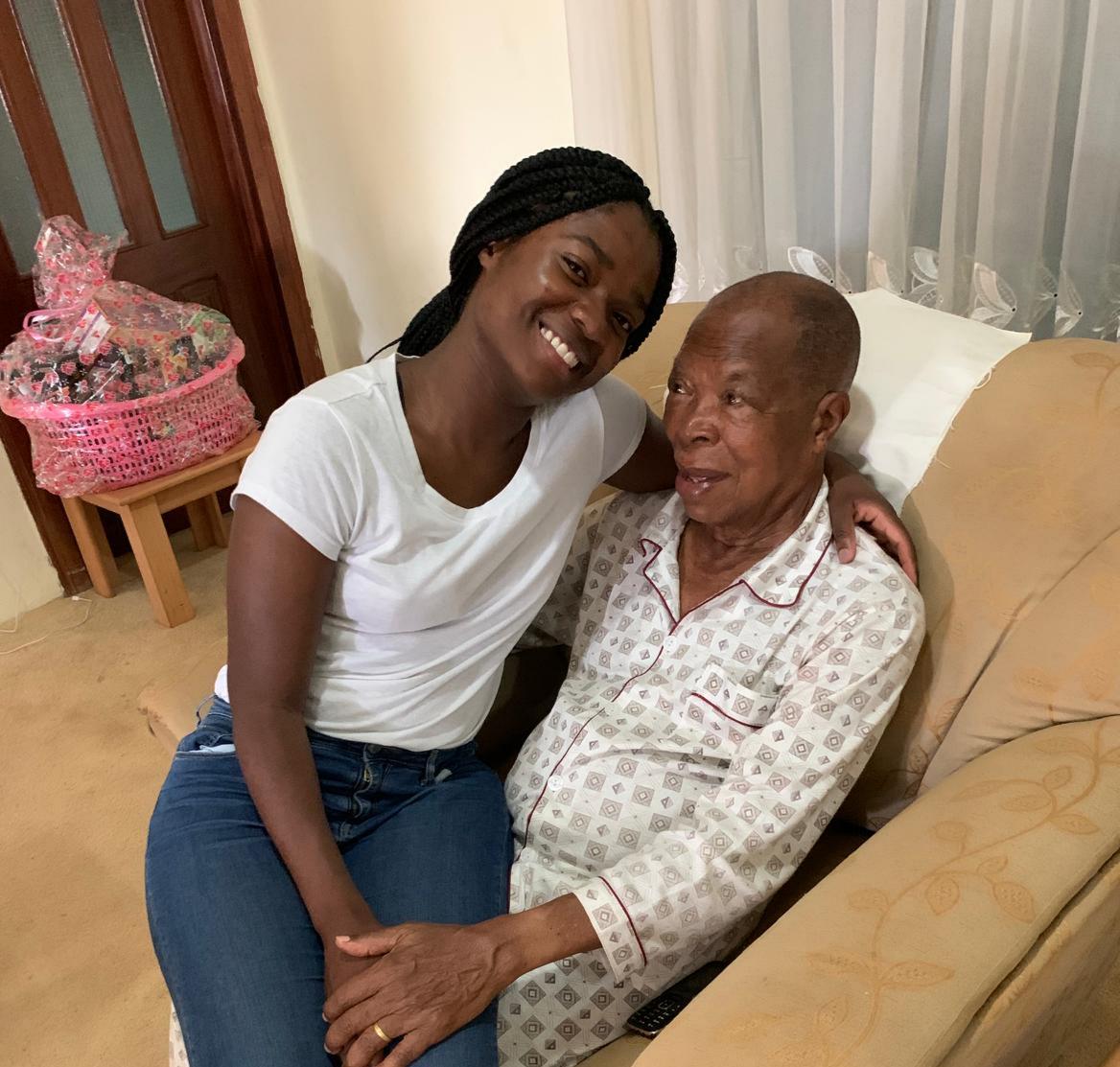
Today’s Royal Farewell is a testament to a man known simply as “Daddy” to most of his world—a true father of many. He engaged productively and intimately across the generations; he welcomed all to his home, whatever their means, status, or age; and he had a way of keeping visitors from the light of day deep into the night, tiring out his household as they served round after round of fufu, banku, koliko, and all sorts of drinks. By his own admission, he was living long for his grandchildren and great-grandchildren. He was the teacher, the mentor, the provider, the confidant of many, the visionary—many men in one man.
Daddy was a devoted Christian, baptized and confirmed in the Evangelical Presbyterian Church. A chorister in his adolescence and young adulthood, he remained actively involved in both the E.P. Church at Koloenu and the New Achimota E.P. Church, where he served for many years as President of the Welfare Group. He and his wife were patrons of the New Achimota E.P. Church Choir.
A Legacy That Inspires
The life of Wing Commander Godwin Hannock Komla Atadja is, above all, a testament to what is possible. He was born with no advantage but his own determination, faith, and willingness to work harder than circumstance demanded. From a village with few roads to opportunity, he rose to become a pilot, a senior military finance officer trained on two continents, an international professional, an award-winning farmer, and a builder of institutions that will outlive us all.
To the young people of today—especially those growing up, as he once did, with more dreams than means—his life speaks a clear and enduring message: where you begin does not determine where you will end. With hard work, discipline, faith, and unbreakable resolve, the child of the humblest village can rise to the highest levels of service and accomplishment. If he could do it, so can you.
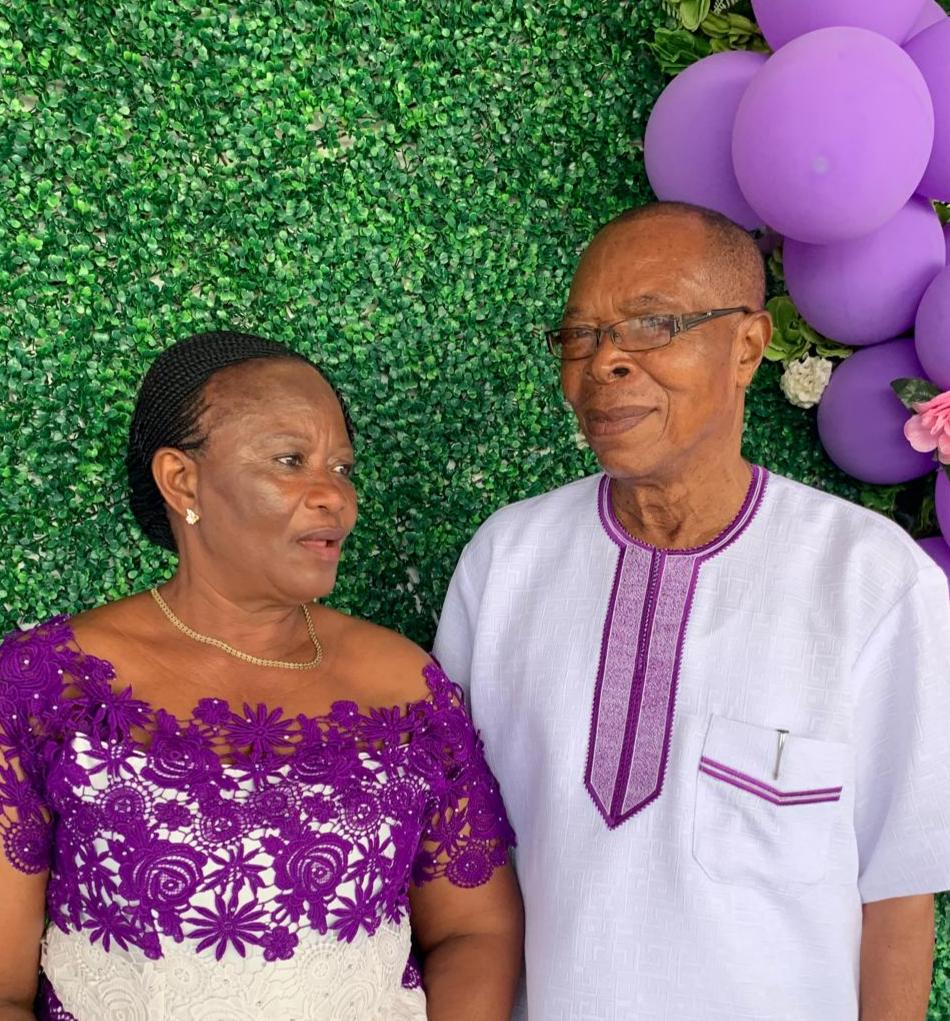
Fo Hannock was a healthy ninety-year-old, newly returned to live among his people at Ve Koloenu and busy with his building projects. He suddenly fell ill on Monday, 20 October 2025, and was received into eternity in his sleep at the Bank Hospital on 7 November 2025. He leaves behind his soulmate and wife, Madam Diana Akua Edusei—who passed as his twin sister, so closely and intimately did they relate—his [XX] biological and adopted children, his loving daughters and sons-in-law, his [XX] grandchildren and great-grandchildren, a proud Nyasorgbor family and Asiodza clan, hundreds of children of the heart who called him Daddy, very loyal friends, a grateful community, the veterans who served alongside him, and a church family who loved him.
To all of them, and to the generations yet to come, he leaves the finest inheritance of all: the living proof of a life well lived—and his elder brother Paul’s words, “The End Crowns the Work.”
Gallery
Timeline
1945
Started Schooling
1967
Served as Staff Officer Grade II
1977
Served as Staff Officer in charge of Finance
He served as Financial Controller at Air Force Headquarters — adviser to the Air Force Commander on all financial matters, custodian of the Air Force’s budget, and the officer entrusted with costing aircraft acquisition, operations, and the training of the nation’s pilots.
1979
Furthered his education as military leader
He attended the Senior Division of the Armed Forces Staff College, the training ground of the military’s most senior leaders. In recognition of his service, he rose to the rank of Wing Commander
1985
He joined the Meat Marketing Board
He served as chief adviser to management on major financial decisions, including strategic and corporate planning, pricing, credit control, import licensing, and the negotiation of credit facilities.
1988
His career then took on an international dimension
He lived and worked in London, England, as Deputy Head of the Import and Export Division of Dan’s Enterprises Ltd.
1993
Established Gack Hackson’s Fish Farms
Served as its Managing Director, and in 1998 was honoured as the Best Fish Farmer in the Volta Region
He Initiated and co-founded the Ve Koloenu Youth Association (VEKYA)
He co-founded the Ve-Lukusi Improvement Society
It was formed to advance the development of Ve, protect and project its culture, and connect its citizens at home and abroad to their land and their chiefs. He led the Society as President for eight years in the 1970s.
Nov 7, 2025
Passed Away
Guestbook
Share your memory, message, or prayer.
3 messages
DF
🕯️
Dominic FN
2 months ago
"
Lighting a candle for Grandpa Hannock; ninety years of service, faith, and family, given fully and given well.
Rest in the peace of the Lord until we meet again.
• Shared with love •
A
🕯️
Anonymous
2 months ago
"
You may no longer be with us, but your love, kindness, and memories will forever remain in our hearts. Your life was a blessing, and your presence deeply missed. Rest peacefully.
• Shared with love •
A
🕯️
Anonymous
2 months ago
"
Your life was a blessing, your memory a treasure, and your presence brought warmth to everyone fortunate enough to know you. Though you are no longer with us, the love, lessons, and memories you left behind will remain in our hearts forever.
You will be deeply missed and always remembered. May your soul rest in perfect peace.